Key takeaways
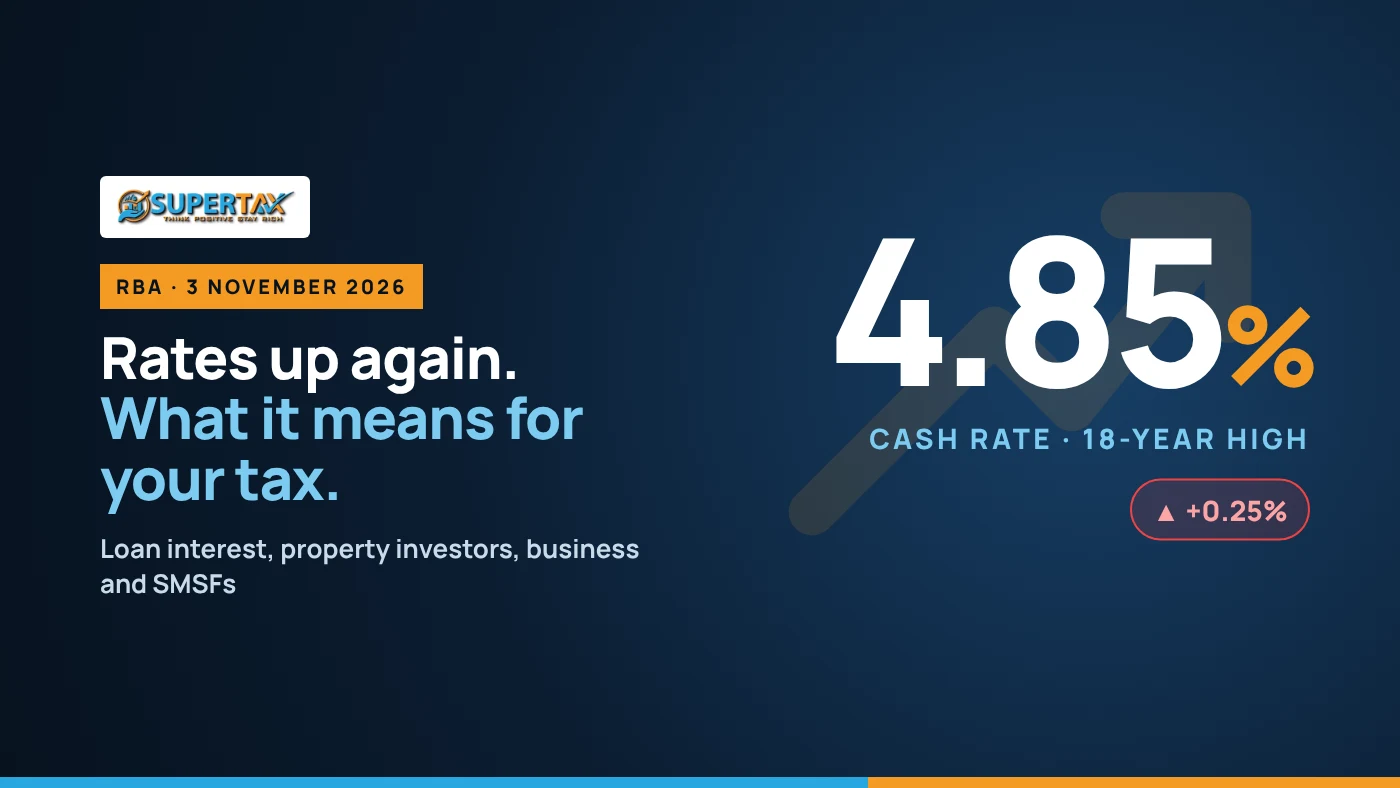
- On 3 November 2026 the RBA raised the cash rate by 0.25 percentage points to 4.85%, the highest level since late 2008.
- Interest on a loan used to buy an investment property is generally tax deductible, so part of a rate rise on that loan comes back at tax time.
- Interest on your own home loan isn't deductible. Paying it down first, or using an offset account, can save more.
- Property investors can ask the ATO to reduce the tax taken from their pay, so they get the benefit of rental losses during the year.
- Higher rates also make ATO debts dearer, because the ATO's interest charge moves with market rates and is no longer deductible.
The Reserve Bank has lifted interest rates again. For most households that means bigger repayments, but the tax effect depends on what each loan was used for. Here's what the November rate rise means for property investors, homeowners, businesses and savers, and what to do about it now.
What the RBA decided
| Detail | What happened |
|---|---|
| New cash rate | 4.85%, up from 4.60% |
| Change | An increase of 0.25 percentage points, the fifth rise in 2026 |
| The vote | Six board members voted for the rise and three voted to hold |
| Why | Inflation remains too high, with conflict in the Middle East pushing up oil prices |
| Next decision | 8 December 2026 |
Banks usually pass rate rises on to variable loans within a few weeks, so check your lender's notice for your new repayment.
Property investors: interest is deductible
If you borrowed to buy a rental property, the interest is generally a tax deduction against your rental income. A rate rise increases that deduction, which softens the blow but doesn't remove it.
Example: an extra 0.25% on a $500,000 investment loan adds about $1,250 a year in interest. If your marginal tax rate is 30% plus the 2% Medicare levy, you'd get about $400 of that back at tax time, so the real extra cost is about $850 a year.
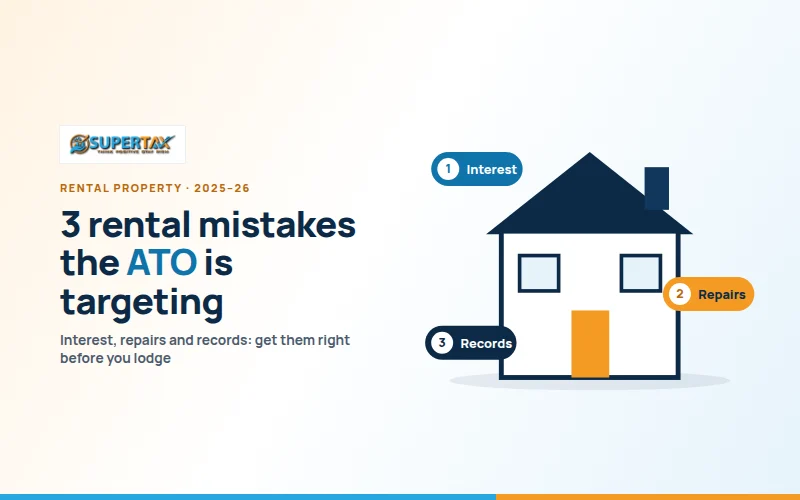
- Only the investment part counts. If you redrew from the loan for private spending, the interest on that part isn't deductible. See our guide to rental property mistakes the ATO is targeting.
- Get the benefit in each pay. If your rental property runs at a loss, you can apply to the ATO for a PAYG withholding variation, so less tax is taken from your wages during the year instead of waiting for a refund.
- Prepaying interest. Individual investors can generally claim up to 12 months of interest paid in advance. If you're thinking about it before 30 June, talk to us first about whether it suits your cash flow.
Your home loan isn't deductible
Interest on the home you live in isn't tax deductible, so every dollar of a rate rise there comes from after-tax income. If you have both a home loan and an investment loan:
- put spare cash towards the non-deductible home loan first, or into its offset account
- don't redraw from an investment loan for private spending, because it mixes deductible and private debt
- check whether your lender will move you to a better rate. A small rate cut on a large home loan saves real after-tax money
Businesses and ATO debts
- Business loan interest is generally deductible when the money is used to earn business income, such as for equipment, stock or working capital.
- ATO debts cost more. The ATO's general interest charge is set from the 90-day bank bill rate plus 7%, so it rises when market rates rise. Since 1 July 2025 it is no longer tax deductible, so clear ATO debts first or set up a payment plan early.
- Cash flow: if higher costs are squeezing profits, you may be able to vary your PAYG instalments so you're not paying tax on income you won't earn.
Savers, retirees and SMSFs
Higher rates mean better returns on savings accounts and term deposits. Remember that interest is taxable income and must be included in your tax return. Your bank reports it to the ATO.
For self-managed super funds, higher cash and term deposit rates can lift returns, while funds with a limited recourse borrowing arrangement will pay more interest. Trustees should review the fund's investment strategy and cash flow, especially if the fund pays pensions. See our latest guide to SMSF property changes.
What to do now
- Check your lender's notice for your new repayment and the date it starts.
- List which loans are for investments or business, and which are private.
- Put spare cash against non-deductible debt first.
- Property investor at a loss? Ask about a PAYG withholding variation.
- Pay off or arrange any ATO debt, because its interest charge has gone up too.
- SMSF trustees: review your investment strategy and cash flow.
Supertax helps property investors, small businesses and SMSF trustees in Werribee and across Australia structure loans and claims correctly. See our property investor services or pricing, or book a consultation. Consultations are available in English, Punjabi (ਪੰਜਾਬੀ), Hindi (हिंदी), Urdu (اردو) and Gujarati (ગુજરાતી).
This article contains general information only and does not take your personal circumstances into account. It is not financial or credit advice. Speak with a registered tax agent before acting.
Feeling the rate rise?
Talk to a registered tax agent at Supertax about your loans, deductions and cash flow.