Key takeaways
- From 1 October 2026, businesses can no longer add a surcharge to most card payments, and the ATO stopped charging its own card payment fee.
- The ATO had planned to stop accepting credit cards after 30 November 2026, saying the merchant fees would cost it about $200 million a year.
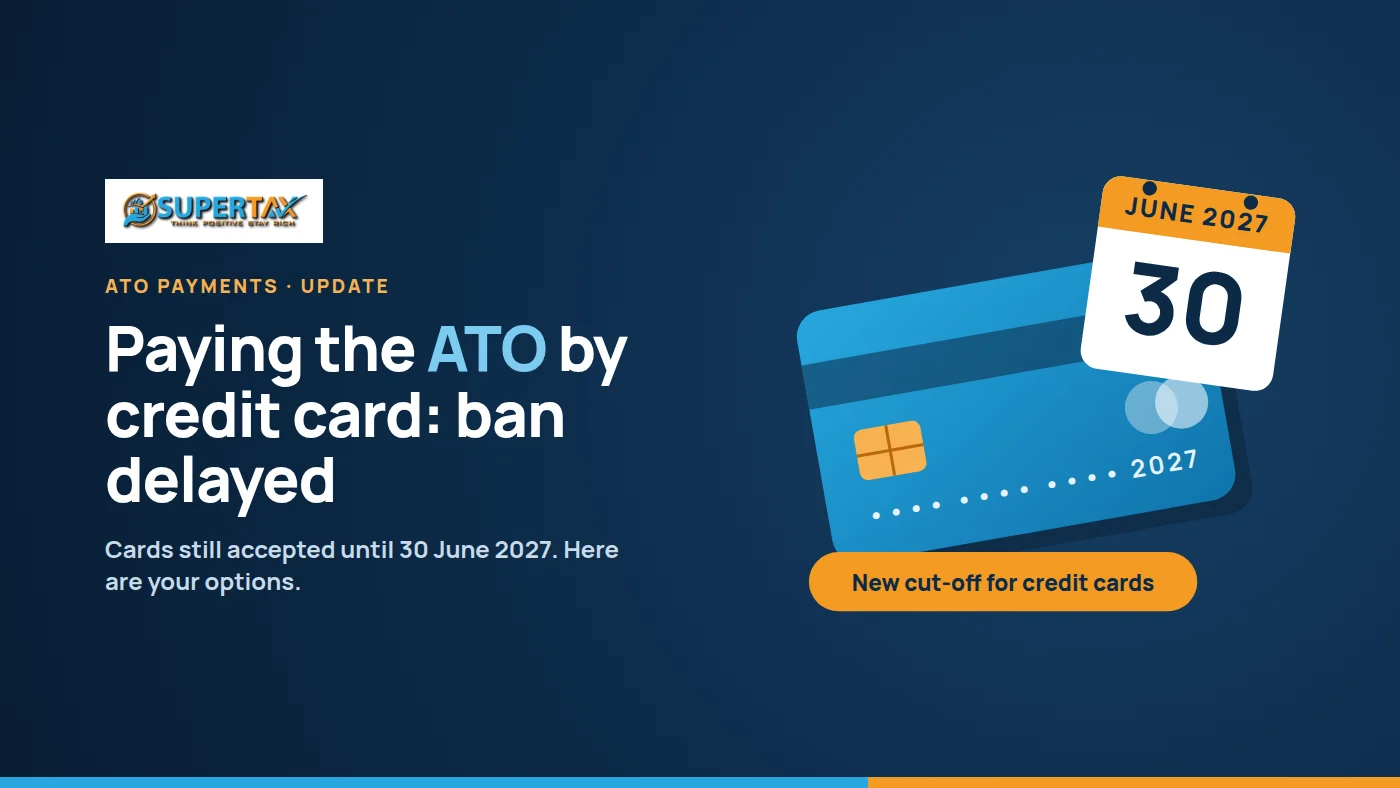
- On 9 October 2026 the Treasurer announced the Government would cover the cost, so the ATO will keep accepting credit cards until 30 June 2027.
- After that, you can still pay by BPAY, bank transfer or debit card, or by credit card through a third-party provider, which may charge a fee.
- Can't pay a tax bill in full? Lodge on time and set up a payment plan early. The interest charge is no longer tax deductible.
Many small businesses pay their BAS, PAYG instalments and income tax by credit card to smooth cash flow or earn rewards points. In October 2026 that option was nearly taken away, then given a reprieve. Here's what happened, what it means for you, and how to plan your tax payments from here.
What changed, and when
| Date | What happened |
|---|---|
| 1 October 2026 | The ban on card surcharges started. The ATO stopped adding its card payment fee, and said it would accept credit cards only until 30 November 2026. |
| 7 October 2026 | The ATO met small business groups and kept its decision. |
| 9 October 2026 | The Treasurer announced extra funding for the ATO, moving the credit card cut-off to 30 June 2027. |
| From 1 July 2027 | Credit card payments are expected to be available only through third-party providers, alongside free options such as BPAY, bank transfer and debit card. |
The cost of the funding is due to be finalised in the Government's mid-year budget update in December, so details could still change. Check the ATO's payment page before you rely on a particular method.
Who this affects
- Small businesses that put BAS, GST, PAYG withholding or instalments on a credit card to use the interest-free period.
- Sole traders and investors who pay their income tax bill by card each year.
- Anyone on a payment plan who pays instalments by credit card.
If that's you, nothing changes before 30 June 2027. But it's worth setting up another way to pay now, so the 2027 cut-off doesn't catch you out.
Your ways to pay the ATO
| Method | What to know |
|---|---|
| BPAY | No ATO fee. Use your payment reference number (PRN), and allow time for your bank to process it. |
| Bank transfer | No ATO fee. Use the ATO's bank details and your PRN as the reference. |
| Debit card | Accepted, with no ATO card fee since 1 October 2026. |
| Credit card | Accepted directly until 30 June 2027. After that, expected only through third-party providers, which may charge a fee. |
| Payment plan | For debts you can't pay in full. You can usually set one up online if you owe $200,000 or less. Interest still applies. |
Is paying tax by credit card still worth it?
A credit card can give you up to a few weeks of breathing room, and the ATO isn't charging a card fee at the moment. That can help a business with lumpy cash flow, as long as you clear the card in full by the statement due date.
If you can't, the maths changes quickly. Card interest rates are often around 20% a year, which is usually higher than the ATO's general interest charge (GIC). Since 1 July 2025, the GIC is no longer tax deductible, but a payment plan agreed with the ATO can still be cheaper than carrying a card balance. Talk to us before you choose.
Whatever you do, lodge on time, even if you can't pay. Failure-to-lodge penalties are separate from the interest on unpaid tax, and the ATO is chasing small business debt more firmly. Director penalty notices have risen sharply in recent years.
If your business takes card payments
The same reform affects how you get paid. Since 1 October 2026, businesses can't add a surcharge when customers pay with eftpos, Mastercard or Visa cards. If you haven't already:
- Remove card surcharges from your point-of-sale settings, invoices, website and booking terms.
- Review your pricing, since the cost of accepting cards now sits in your prices.
- Check your merchant statements. Card fees for businesses were cut as part of the same reforms.
- Keep recording merchant fees in your books. They are generally a deductible business expense.
Your tax payment checklist
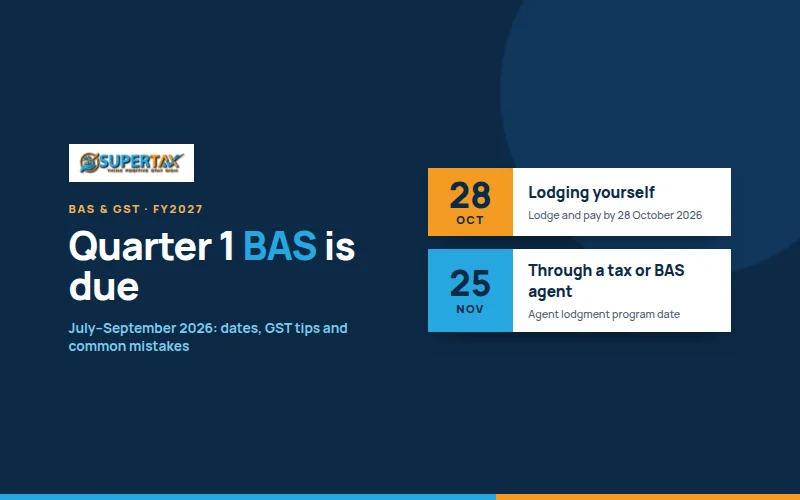
- Note your next due dates: the Q1 BAS is due 28 October 2026 if you lodge yourself, or 25 November through a tax or BAS agent.
- Find your payment reference number (PRN) in ATO online services or on your notice.
- Set up BPAY or a bank transfer as a backup to your credit card.
- If you rely on a card for cash flow, plan for the change after 30 June 2027.
- Can't pay in full? Lodge on time and arrange a payment plan before the due date.
- Remove card surcharges from your own invoices and checkout.
Supertax helps small businesses across Werribee and Melbourne's west manage BAS, tax payments and ATO debts, including payment plans. See our small business services, or book a free 15-minute consultation. Consultations are available in English, Punjabi (ਪੰਜਾਬੀ), Hindi (हिंदी), Urdu (اردو) and Gujarati (ગુજરાતી).
This article contains general information only and does not take your personal circumstances into account. ATO payment arrangements may change, so check the ATO website or speak with a registered tax agent before acting.
Got a tax bill coming up?
Talk to a registered tax agent at Supertax about the best way to pay.